
Ring Die vs Flat Die Pellet Machine – Find the Perfect Pellet Mill for Your Business Subheadline: Expert Side-by-Side Comparison | Flat Die (150–1500 kg/h) & Ring Die (1–20 ton/h) | Animal Feed & Biomass Fuel | Custom Solutions from a 15+ Year Manufacturer
advantage Durable and sturdy, with low energy consumption
Get a Quick Quote & Free Consultation →
Choosing between a flat die pellet machine and a ring die pellet machine is the single most important equipment decision for any feed processing startup or growing farm. Both designs compress powdered raw materials into high-density feed or fuel pellets, but they serve fundamentally different production scales, budgets, and operational goals. With over 15 years of manufacturing and exporting both types to more than 45 countries, we understand that the wrong choice leads to high operating costs, frequent downtime, or wasted capacity. This page gives you a transparent, engineer-level comparison of ring die and flat die pellet mills. You will understand exactly how they differ in output, pellet quality, power consumption, die wear, investment cost, and ideal applications — so you can confidently invest in the machine that fits your current needs and future growth plans.
True Dual-Manufacturer Expertise: Unlike most suppliers who push only one type, we design, build, and export both flat die and ring die pellet mills. Our recommendation is based on your farm size and raw materials, not our inventory.
Data-Driven Comparison, Not Sales Talk: The comparison data below comes from 150+ client installations and our own test lab, covering electricity consumption per ton, actual die life, and pellet forming rates.
Full Line Support for Both: Whether you pick a simple flat die machine for home use or a complete 20 ton/h ring die feed factory line with conditioner, cooler, and crumbler, we configure, deliver, and support the complete solution.
Lifetime Technical Guidance: Our engineers help you select the right die compression ratio, pellet size, and steam conditioning setup for your specific formula—chicken feed, cattle feed, or biomass briquettes.
Head-to-Head Technical Comparison: Flat Die vs Ring Die Pellet Machine
(This table is based on our FL series flat die mills and SZLH series ring die mills processing standard animal feed pellets.)
| Comparison Point | Flat Die Pellet Machine | Ring Die Pellet Machine |
|---|---|---|
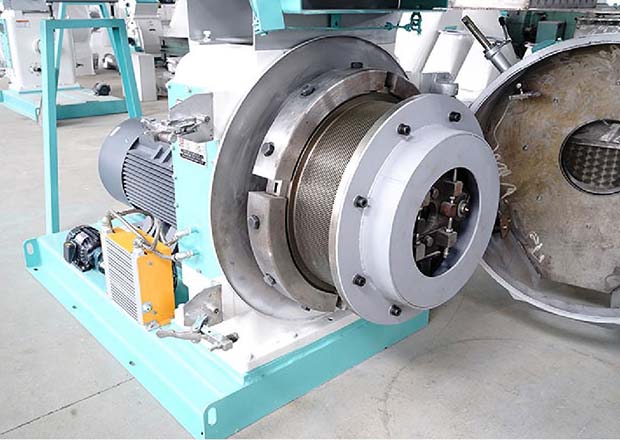
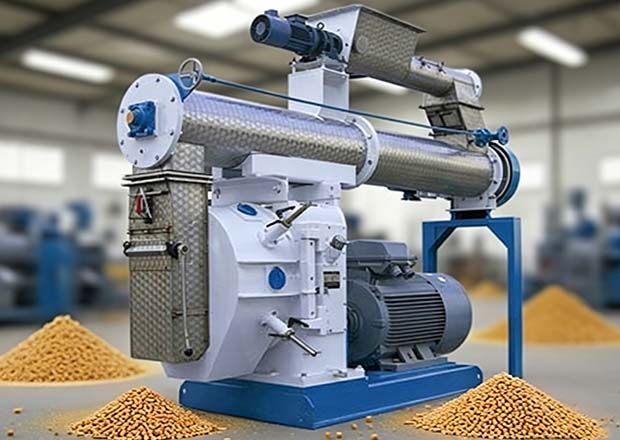
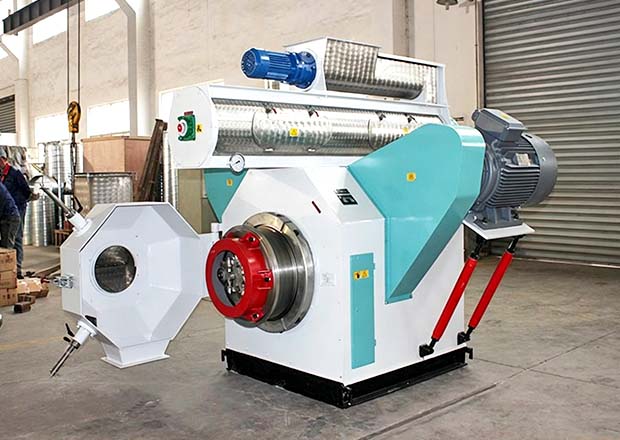
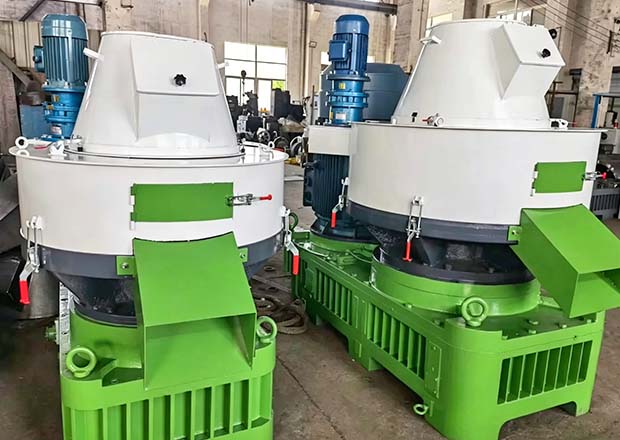
| Core Working Principle | Rollers rotate over a stationary flat die plate. Material is pressed downward through die holes. | A rotating ring die ring and stationary rollers. Material is pressed outward through die holes by centrifugal force. |
| Typical Output Range | 150 – 1,500 kg/h | 1 – 20+ tons/h (up to 40 t/h for large models) |
| Ideal Daily Production | 0.5 – 10 tons per day | 10 – 500 tons per day |
| Pellet Forming Rate | ≥95% | ≥97% |
| Pellet Surface Quality | Smooth, slightly less polished than ring die pellets. Excellent density. | Very smooth, shiny surface. High hardness and density. |
| Pellet Diameter Flexibility | Very easy die change. Quick switch between 2-12mm pellets. Ideal for multi-animal farms. | Die change requires more time and heavy tools. Better for dedicated, long-run batches. |
| Die Service Life | 600–1,000 tons per die (varies by aperture) | 1,500–3,000+ tons per ring die (premium alloy) |
| Power Consumption per Ton | Approx. 35–50 kWh/ton (electric model) | Approx. 25–40 kWh/ton (more efficient at scale) |
| Machine Price (Investment) | Low to moderate. Accessible for small farms and startups. | High initial investment. Economical only when operated at >70% capacity. |
| Maintenance Complexity | Low. Grease bearings, replace rollers and die. No specialized training needed. | Moderate to high. Requires regular roller gap adjustment, steam system care, and skilled operator. |
| Steam Conditioning | Optional small steam jacket conditioner | Standard heavy-duty conditioner for continuous steam addition |
| Best For | Small/medium farms, home feed processing, multi-species farms, biomass pellet startups. | Commercial feed mills, large poultry/cattle integrations, industrial wood pellet plants. |
Which Machine Matches Your Business? Decision Guide
Based on our experience equipping 1,200+ clients, here is a quick self-check:
Choose a Flat Die Pellet Machine if:
You produce less than 10 tons of feed per day.
You raise chickens, pigs, cattle, fish, and rabbits — and switch between different pellet sizes frequently.
Your budget is limited, and you need a fast return on investment (typical payback: 6–12 months).
You want a machine that any family member or farm worker can operate and maintain.
You also plan to produce small batches of biomass fuel pellets.
Choose a Ring Die Pellet Machine if:
Your daily feed requirement exceeds 10 tons (or you sell feed commercially).
You run a dedicated feed mill for broilers, layers, or fish with long production runs of the same formula.
You seek the lowest operating cost per ton (power, die wear, labor).
You need a fully automated line with conditioner, cooler, sieve, and automatic bagging.
You aim to produce premium, export-grade animal feed or industrial wood pellets.
Uncertain? Send us a message with your daily output goal and raw materials. We will recommend a flat die or ring die setup with a detailed cost-benefit calculation.
Technical Specifications of Our Typical Flat Die & Ring Die Models
*(These two models represent our most frequently exported solutions for small and large operations. A complete catalog with 20+ models is available on request.)*
Flat Die Pellet Machine – FL-300
Output: 600–800 kg/h (Φ6mm animal feed)
Motor: 37 kW (50 HP), custom voltage
Pellet Sizes: 2, 3, 4, 6, 8, 10, 12mm quick-change dies
Roller & Die: 20CrMnTi alloy, HRC58-62
Weight: 720 kg net
Best For: Medium poultry/livestock farms, small feed shops, entry-level biomass fuel
Ring Die Pellet Machine – SZLH320
Output: 1–2 ton/h (poultry feed, conditioned)
Main Motor: 37 kW (50 HP) / 45 kW optional
Feeder & Conditioner: Stainless steel screw feeder + steam conditioner (1.2m length)
Ring Die Inner Diameter: 320mm; effective working surface: 1,250 cm²
Pellet Size: 2–8mm ring dies available
Forming Rate: ≥97%
Weight: ~2,500 kg net
Best For: Commercial feed mills producing 1–5 tons/hour, long-run batches
*Larger models: SZLH350 (3–5 t/h), SZLH420 (5–8 t/h), SZLH508 (8–12 t/h)*
Broad Capabilities for Both Machine Types
While both flat die and ring die pellet machines can process identical raw materials (corn, soybean meal, rice husk, straw, alfalfa, fish meal), their application niches differ:
Flat Die Granulators are heavily used in small-scale poultry and pig farms, home-based businesses, aquaculture sinking feed (fine dies), and mobile biomass briquetting setups.
Ring Die Pellet Mills dominate large-scale commercial poultry and aquatic feed factories, integrated cattle feedlots, wood pellet export plants, and any operation where continuous 24/7 production with steam conditioning is standard.
We supply both machines with raw material grinding, mixing, drying, and cooling equipment to build a complete, turnkey production line.

Tell us your production requirements and we will provide you with the best solution within 24 hours.
We're here to help with all your inquiries. Send us a message and we'll get back to you promptly.
Fill out the form below and we'll contact you soon